The first thing that must be recognized about the book of Joel is that it has a very different numbering system in English than the Hebrew. This makes the chapters and verses hard to synchronize, as the English counts three chapters where the Hebrew has four. This makes it hard to remember where you are when your neck keeps turning from one text to another! There are now Bible study programs that help with this. We use Accordance Bible Software, which automatically matches the verses.
There is nothing in this prophecy to indicate the date it was written, and it is not addressed to anyone in particular. Because of Joel’s reference to the four locusts, most conservative scholars have dated the book as pre-exile, but after the division of the Northern and Southern kingdoms of Israel and Judah, most likely during the reign of Joash in the ninth century BC, well before the Babylonian exile. That put us somewhere around 800BC.
The word of the LORD that came to Joel, the son of Pethuel: Joel 1:1
The meaning of the name Joel is YHWH is Elohim, or the LORD is God. His father’s name, Petuel means spacious or abundance from God.
2 Hear this, you aged men, give ear, all inhabitants of the land! Has such a thing happened in your days, or in the days of your fathers? 3 Tell your children of it, and let your children tell their children, and their children another generation. Joel 1:2-3
This is a call of the prophet to compare what he is about to say to all the things that have come before. This is something so important that all future generations will need to be told. Both the hear and the tell are in the imperfect or continuous action. They are to announce this perpetually.
His address is to the elders. The wise in the ways of the world must remember his warning. This warning must not be forgotten; this admonition must not be lost to the coming generations. Nothing like this has happened before, and nothing like it will happen again.
The Locust Plague
4 What the cutting locust left, the swarming locust has eaten. What the swarming locust left, the hopping locust has eaten, and what the hopping locust left, the destroying locust has eaten. Joel 1:4
Judgement comes in fours. There are always four to any judgment. The first time the fourfold judgment presents itself is in Leviticus 26.
22 And I will let loose the wild beasts among you, which shall rob you of your children, and destroy your cattle, and make you few in number, so that your ways shall become desolate. Lev 26:22
25 And I will bring a sword upon you, that shall execute vengeance for the covenant; and if you gather within your cities I will send pestilence among you, and you shall be delivered into the hand of the enemy. Lev 26:25
So, judgment in fours continues throughout the Bible. [Jer. 15:3; Ezek. 14:21; Dan. 2:36 -40; 7:3; Rev. 6:1 -9]
Some have translated these as worms, others as locusts. There are four different words for these bugs. They are gazam, a noun that means to devour or devastate, arabah, which is the locust of the ten plagues, and yeleq, which is a kind of locust, and chasil, which is the larval state of a locust. They are not here as an entomological study. We are not being directed to look up the different species or the different stages in the development of locusts. They are here to represent utter destruction. They cut, they swarm, they hop, and they destroy. There will be nothing left.
These four locusts of Joel are now clear to us, mostly because of Daniel. They are the Imperial nations of Babylon, Persia, Greece, and Rome. They did come upon the descendants of Israel. They were brought by God because the people did not follow the covenant as described in Leviticus 26.
The Distress of Various Citizens
The Drunkards
5 Awake, you drunkards, and weep; and wail, all you drinkers of wine, because of the sweet wine, for it is cut off from your mouth. 6 For a nation has come up against my land, powerful and without number; its teeth are lions’ teeth, and it has the fangs of a lioness. 7 It has laid waste my vines, and splintered my fig trees; it has stripped off their bark and thrown it down; their branches are made white. Joel 1:5-7
Nothing else will get the drunkard’s attention but the loss of his favorite drink. There will not be any wine left for their usual merriments. There will be no singing and dancing from the joy of the harvest. There is even a Psalm about this calamity.
1 By the waters of Babylon, there we sat down and wept, when we remembered Zion. 2 On the willows there we hung up our lyres. 3 For there our captors required of us songs, and our tormentors, mirth, saying, “Sing us one of the songs of Zion!” 4 How shall we sing the LORD’s song in a foreign land? 5 If I forget you, O Jerusalem, let my right hand wither! 6 Let my tongue cleave to the roof of my mouth, if I do not remember you, if I do not set Jerusalem above my highest joy! 7 Remember, O LORD, against the Edomites the day of Jerusalem, how they said, “Rase it, rase it! Down to its foundations!” 8 O daughter of Babylon, you devastator! Happy shall he be who requites you with what you have done to us! 9 Happy shall he be who takes your little ones and dashes them against the rock! Psa. 137:1-9
The Virgins and Priests
8 Lament like a virgin girded with sackcloth for the bridegroom of her youth. 9 The cereal offering and the drink offering are cut off from the house of the LORD. The priests mourn, the ministers of the LORD. 10 The fields are laid waste, the ground mourns; because the grain is destroyed, the wine fails, the oil languishes. Joel 1:8-10
There is nothing more tragic than a young woman who loses her lover before marriage. All that might have been is forever lost. There will be no house, no children, no fulfillment of the dreams and plans that most young women have. She will be skipping the fabulous dress of joy for the sackcloth of mourning.
The priests have nothing to do. The house of YHWH, the only house of worship, is lost. What good is a priest when there is no place to offer the sacrifices? There is now no place to sacrifice, and without a sacrifice, there is no access to God.
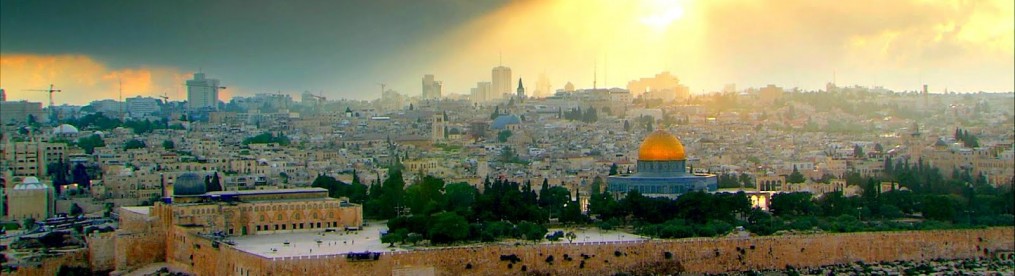
The fields are laid waste, there is no harvest. The city is lost, and with it all signs of God’s presence are lost as well. In our day, there hasn’t been a temple in Jerusalem for over 2000 years. We are used to this calamity, where Joel finds it quite alarming.
The Farmers
There is yet another calamity to befall the careless people.
11 Be confounded, O tillers of the soil, wail,
O vinedressers, for the wheat and the barley;
because the harvest of the field has perished.
12 The vine withers, the fig tree languishes.
Pomegranate, palm, and apple,
all the trees of the field are withered;
and gladness fails from the sons of men. Joel 1 :11-12
There is nothing about people starving. The fields are empty and untended, not unproductive. Others have taken or consumed the produce. Gladness fails the people. Gladness hails or they are ashamed of joy from the children to the men, as children are hushed in a solemn assembly. The warning is that they will lose it all. However, no one took him seriously. They were God’s people after all. They continued in their careless ways, right up till Nebuchadnezzar showed up and three times he despoiled the city and its people.
Call to Fast
13 Gird on sackcloth and lament, O priests, wail, O ministers of the altar. Go in, pass the night in sackcloth, O ministers of my God! Because cereal offering and drink offering are withheld from the house of your God. 14 Sanctify a fast, call a solemn assembly. Gather the elders and all the inhabitants of the land to the house of the LORD your God; and cry to the LORD. Joel 1:13-14
Their only hope is earnest national humiliation and penitence before YHWH. After all, He may yet be moved by their supplications. The old men who will remember are called out. They remembered that no one fasted, no one prayed except Jeremiah, who was largely ignored. The crazy prophet they threw in the pit.[Jer. 38:6]
15 Alas for the day! For the day of the LORD is near, and as destruction from the Almighty it comes. 16 Is not the food cut off before our eyes, joy and gladness from the house of our God? Joel 1:15-16
The day of the LORD is any day He may choose to come in judgment. [Is 13:6; Ezek. 30:2,3; Amos 5:18,20; Obad. 15; Zeph. 1:7,14;] It is not exclusive to the end of the world. However, here it is, the end of their world. The world where Jerusalem was the place to worship the living God.
7 The seed shrivels under the clods, the storehouses are desolate; the granaries are ruined because the grain has failed. 18 How the beasts groan! The herds of cattle are perplexed because there is no pasture for them; even the flocks of sheep are dismayed. Joel 1:17-18
Now there is nothing to eat, either for man or beast. Even sheep who can find the smallest herb are unable to find any. The locust’s job is complete.
19 Unto thee, O LORD, I cry. For fire has devoured the pastures of the wilderness, and flame has burned all the trees of the field. 20 Even the wild beasts cry to thee because the water brooks are dried up, and fire has devoured the pastures of the wilderness. Joel 1:19-20
Now, when all is gone, and the water has also failed. We have found it to be true as modern Israel has replanted the trees, so that the rains might return. They have, and the desert blooms again.