1 And again Jesus spoke to them in parables, saying, 2 “The kingdom of heaven may be compared to a king who gave a marriage feast for his son, 3 and sent his servants to call those who were invited to the marriage feast; but they would not come. 4 Again he sent other servants, saying, ‘Tell those who are invited, Behold, I have made ready my dinner, my oxen and my fat calves are killed, and everything is ready; come to the marriage feast.’ 5 But they made light of it and went off, one to his farm, another to his business, 6 while the rest seized his servants, treated them shamefully, and killed them. 7 The king was angry, and he sent his troops and destroyed those murderers and burned their city. 8 Then he said to his servants, ‘The wedding is ready, but those invited were not worthy. 9 Go therefore to the thoroughfares, and invite to the marriage feast as many as you find.’ 10 And those servants went out into the streets and gathered all whom they found, both bad and good; so the wedding hall was filled with guests.
11 “But when the king came in to look at the guests, he saw there a man who had no wedding garment; 12 and he said to him, ‘Friend, how did you get in here without a wedding garment?’ And he was speechless. 13 Then the king said to the attendants, ‘Bind him hand and foot, and cast him into the outer darkness; there men will weep and gnash their teeth.’ 14 For many are called, but few are chosen.” Matt. 22:1-14
Kingdom Parables
The vast majority of Messiah’s teachings were in parables. The kingdom parables are throughout His teachings. Messiah explained that the Kingdom of Heaven would be a spiritual Kingdom and was to be hidden from the “natural man.” It was, and is known only to a few.
This is why I speak to them in parables, because seeing they do not see, and hearing they do not hear, nor do they understand. Matt. 13:13
Jesus answered, “My kingship is not of this world; if my kingship were of this world, my servants would fight, that I might not be handed over to the Jews; but my kingship is not from the world.” John 18:36
FYI: The Kingdom of Heaven and the Kingdom of God are used interchangeably in the Bible. Matthew tends to favor the term “kingdom of heaven,” where Mark, Luke, and John favor “the kingdom of God.”
The Wedding Banquet
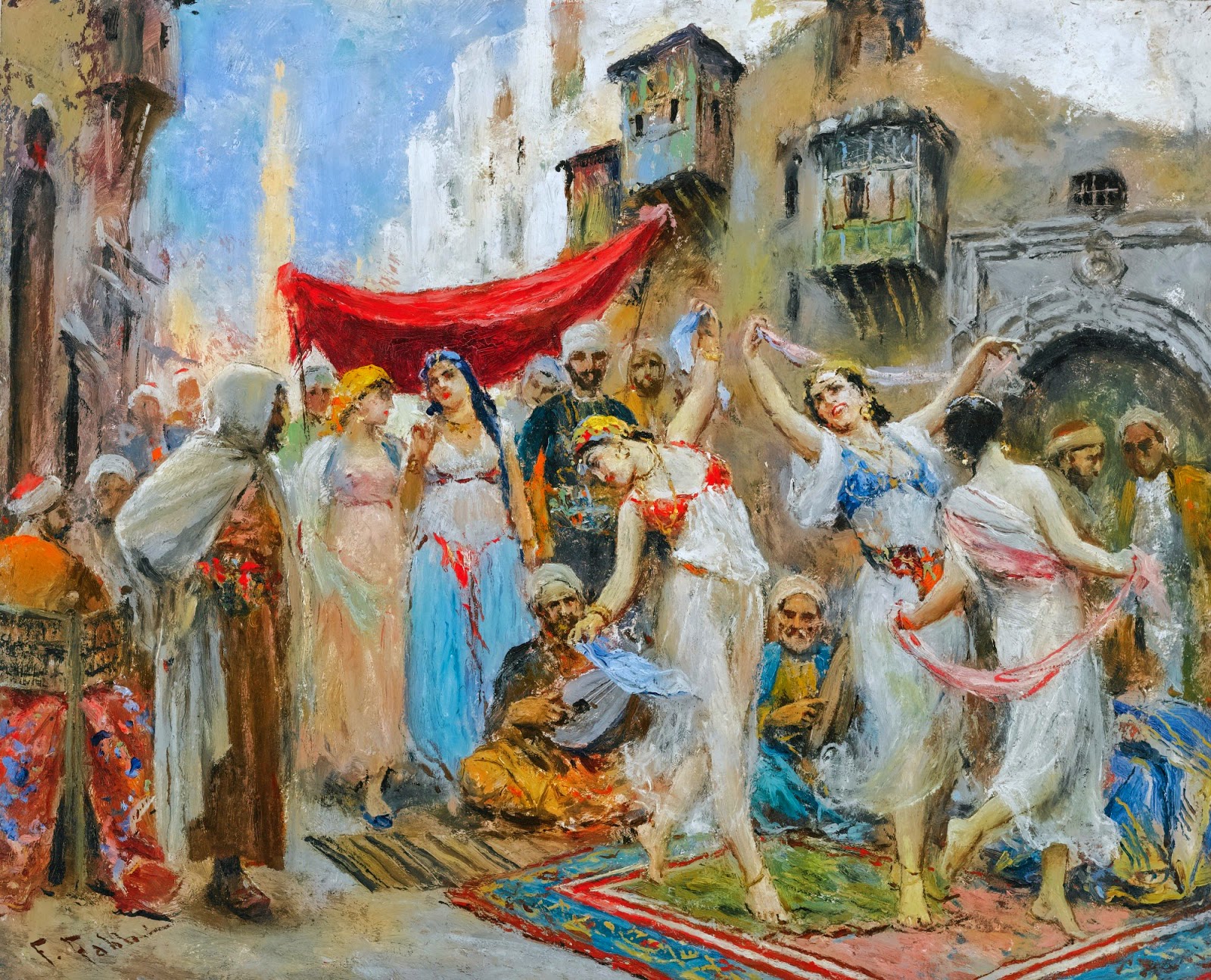
The Marriage feast is symbolic of the offer to come into the Kingdom. It is an analogy of God the Father giving a great celebration of the Bride of Christ, i.e., the Congregation of our Lord. The Congregation is to be “wed” to the Son. Those who have the proper “wedding garments” would be allowed to celebrate at His feast. This invitation to the king’s feast was initially sent to only a select few guests, i.e., the Jewish people. Some refused to come at all, thinking it unworthy of serious consideration, and went about their own way. Others killed the king’s servants! The Marriage Feast was ultimately made up of those who would come…and a few who knew they were unprepared.
I feel a divine jealousy for you, for I betrothed you to Christ to present you as a pure bride to her one husband. 2Cor. 11:2
The Spirit and the Bride say, “Come.” And let him who hears say, “Come.” And let him who is thirsty come, let him who desires take the water of life without price. Rev. 22:17
Jewish Confusion
The ruling Elders of Israel had a different feast planned from their study of prophecy. This feast required strict obedience to the letter of the Law. The Pharisees were committed to a bondage of external appearance. The Sadducees, who were of the Priestly class, saw their lives revolving around an ever greater administration of the sanctuary, guarding more vigilantly the sanctity of the temple. Both groups saw themselves as above others because they maintained themselves in a state of strict ceremonial cleanness that no ordinary person could achieve. Theirs was a faith of exclusion, not inclusion. They avoided contact with anyone who might make them or their precious temple unclean. They had forgotten the weightier issues of the Law and had added to the Law.
“Woe to you, scribes and Pharisees, hypocrites! for you tithe mint and dill and cummin, and have neglected the weightier matters of the law, justice and mercy and faith; these you ought to have done, without neglecting the others. Matt. 23:23
The idea that Messiah came to be the very representation of the sacrificial lamb slaughtered in the Temple to redeem us from our sins was very disturbing to them. After all, they were making a nice living off their system. The teachings of this itinerant rabbi threatened everything they held dear. His offer of an emancipation that would free us from the rule of such men, restore the spiritual liberty of the individual, and establish a direct relationship to God by-passing the Priests. With the death and resurrection of Jesus, there would be no concern whether something or someone was clean, for our Messiah’s touch makes anything and anyone clean. His guardianship is not over the physical temple but, rather, the eternal soul.
“The Spirit of the Lord is upon me, because he has anointed me to preach good news to the poor. He has sent me to proclaim release to the captives and recovering of sight to the blind, to set at liberty those who are oppressed,” Luke 4:18 c.f. Is. 11:2-5
The Jewish leaders had read the prophecy to mean literal prisons, literal blindness, and literal imperial oppressors. Messiah was teaching that they themselves were the oppressors; they were holding the people captive and keeping them blind. So blind that they were refusing to let the people come to the wedding. Messiah invited the Jews to a kingdom feast that did not embody a physical temple, nor the physical ceremonial rituals within. These Holy Laws had always been intended to be on our hearts. The Temple and the rituals were symbolic of a perfect sacrifice to come. We see over and over in Moses and the prophets that they were to circumcise their hearts [Deut. 10:16; Deut. 30:6], all the nations were to be blessed [Gen. 18:18; Jer. 4:2], He has no delight in sacrifice [Psa. 51:16; Hos. 8:13; Amos 5:21, etc.]
If you believed Moses, you would believe me, for he wrote of me. John 5:46
The Pharisees and the Sadducees did not understand the symbolism in the Law. Their practice was literal. There was no teaching among the Jewish leaders that the Law’s physical rituals were to be replaced by our Messiah’s sacrifice. The Congregation would no longer need to circumcise the flesh, but rather our hearts must be symbolically cut. No longer were the letters of the Law to be ones of bondage to the external; now they are to guide the inner man. We have been emancipated from the letter of the Law to follow His Laws that are now written on our hearts. We are now at liberty, no longer subject to the oppressions of the ceremonial ritual Law.
The Kingdom of Heaven is not made up of those who will not come. The original invited guests (many Jews) would not come, and others “good” (those who believe, Jew and Gentile) and “bad” (those who do not believe) are sought to fill the guest list. And the hall of the marriage supper of the Lamb was filled!
“The Spirit of the Lord is upon me, because he has anointed me to preach good news to the poor. He has sent me to proclaim release to the captives and recovering of sight to the blind, to set at liberty those who are oppressed,” Luke 4:18And the angel said to me, “Write this: Blessed are those who are invited to the marriage supper of the Lamb.” And he said to me, “These are true words of God.” Rev. 19:9
Examine yourselves, to see whether you are holding to your faith. Test yourselves. Do you not realize that Jesus Christ is in you? — unless indeed you fail to meet the test! 2Cor. 13:5
However, there is a warning to those who have come from the streets and byways of life. They still must be “dressed properly.” The warning is symbolic of the Lamb’s righteous garments and is repeated in The Revelation.
He who conquers shall be clad thus in white garments, and I will not blot his name out of the book of life; I will confess his name before my Father and before his angels. Rev. 3:5
Therefore I counsel you to buy from me gold refined by fire, that you may be rich, and white garments to clothe you and to keep the shame of your nakedness from being seen, and salve to anoint your eyes, that you may see. Rev. 3:18
After this I looked, and behold, a great multitude which no man could number, from every nation, from all tribes and peoples and tongues, standing before the throne and before the Lamb, clothed in white robes, with palm branches in their hands, Rev. 7:9
If you are not clothed in the righteousness of Christ, you will be thrown out of the marriage feast and into outer darkness.
John said in Matt 3:2 that the Kingdom of Heaven was at hand. He did not say that it was in the future, but indicated that it was imminent. The Futurists teach that the Kingdom is something in our future. But, if that is the case, then John the Baptist was a false prophet. In Matt 13, the Messiah himself explained what this Kingdom is like. It is like a sower going out to sow, a grain of mustard seed, leaven, etc. All the Kingdom parables show that the Kingdom of heaven would replace the Judean temple sacrifice system, and that this new Kingdom would be partially corrupt.
Therefore I tell you, the kingdom of God will be taken away from you and given to a nation producing the fruits of it.” Matt. 21:43
“Lo, I am coming like a thief! Blessed is he who is awake, keeping his garments that he may not go naked and be seen exposed!” Rev. 16:15