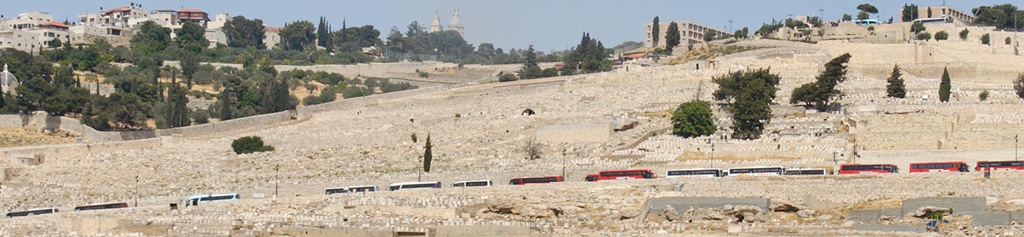
1 And when they drew near to Jerusalem and came to Bethphage, to the Mount of Olives, then Jesus sent two disciples, 2 saying to them, “Go into the village opposite you, and immediately you will find an ass tied, and a colt with her; untie them and bring them to me. 3 If any one says anything to you, you shall say, ‘The Lord has need of them,’ and he will send them immediately.” 4 This took place to fulfil what was spoken by the prophet, saying, 5 “Tell the daughter of Zion, Behold, your king is coming to you, humble, and mounted on an ass, and on a colt, the foal of an ass.” 6 The disciples went and did as Jesus had directed them; 7 they brought the ass and the colt, and put their garments on them, and he sat thereon. 8 Most of the crowd spread their garments on the road, and others cut branches from the trees and spread them on the road. 9 And the crowds that went before him and that followed him shouted, “Hosanna to the Son of David! Blessed is he who comes in the name of the Lord! Hosanna in the highest!” 10 And when he entered Jerusalem, all the city was stirred, saying, “Who is this?” 11 And the crowds said, “This is the prophet Jesus from Nazareth of Galilee.” Matt. 21:1-11
Context
Messiah knew these were the last teachings He would give to the people. Their spiritual leaders had not prepared them for this day. In the last few days, Messiah needed to explain to the people that what they were expecting would not be. The Sadducees, Pharisees, and the Scribes had taught that “the days of the messiah” would bring about a glorious Jewish age. Instead, He explained that He came to bring utter destruction and exile.
Jesus’ entry into Jerusalem was on the tenth of Nisan, the day the Jews were to choose their lambs for Passover. These lambs were to be inspected so that they were without spot or blemish; they were to be Holy. The Passover is one of the seven feasts of the Lord, given in Leviticus 23. The Passover and Feasts of First Fruits were prophetic of the covering of sin by blood and the newness of life.
3 Tell all the congregation of Israel that on the tenth day of this month they shall take every man a lamb according to their fathers’ houses, a lamb for a household; 4 and if the household is too small for a lamb, then a man and his neighbor next to his house shall take according to the number of persons; according to what each can eat you shall make your count for the lamb. 5 Your lamb shall be without blemish, a male a year old; you shall take it from the sheep or from the goats; Ex 12:3-5
FYI: The lamb was to be slain on the fourth day of the last prophetic week of Daniel Chapter 9.
Our Messiah entered Jerusalem as their humble king. He stood there presenting Himself for inspection. He presented Himself as the Lamb without spot or blemish. Fulfilling all the symbolic meaning contained in the rituals of the Passover and First Fruits, and they did not see.
John, the Baptizer, said Jesus would Himself be the Passover offering.
The next day he saw Jesus coming toward him, and said, “Behold, the Lamb of God, who takes away the sin of the world! John 1:29
The crowds outside the city recognized that Jesus was the Son of David. They saw Him as too important to ride on a simple dirt road. However, the people in the city did not recognize Him. Although He had come up to Jerusalem and taught in the temple on previous Passovers, they didn’t seem to know Him.
9 And the crowds that went before him and that followed him shouted, “Hosanna to the Son of David! Blessed is he who comes in the name of the Lord! Hosanna in the highest!” 10 And when he entered Jerusalem, all the city was stirred, saying, “Who is this?” Matt 21:9-10
The Prophecy
“Rejoice greatly, O daughter of Zion! Shout aloud, O daughter of Jerusalem! Lo, your king comes to you; triumphant and victorious is he, humble and riding on an ass, on a colt the foal of an ass.” Zech. 9:9
It is in these fulfilled prophecies of the New Testament that the Bible student first begins to understand how prophecy is to be interpreted. It requires a complete reading in the context of the prophecy as first written in the Old Testament. We must build on what is known before jumping off into the unknown. Fulfillments are not often what anyone would have understood the prophecy to mean. Zechariah 9 talks of the king being triumphant and victorious. One could hardly have imagined by reading it that this would mean the Messiah was on His way to His own sacrifice as the “Lamb slain before the foundation of the universe.” [Rev. 13:8] In passages that predict the Messiah’s death, there is nothing that sounds the least bit triumphant. Yes, we now know that He was victorious in defeating sin and death, but even that has yet to be fully realized.
23 But the words, “it was reckoned to him,” were written not for his sake alone, 24 but for ours also. It will be reckoned to us who believe in him that raised from the dead Jesus our Lord, 25 who was put to death for our trespasses and raised for our justification. Rom. 4:23-25
As our Messiah came to Jerusalem riding on an ass’ colt, the crowds rose up and affirmed that the itinerant Rabbi from Nazareth was their king. They shouted the words from the Psalms.
“Blessed be he who enters in the name of the LORD! We bless you from the house of the LORD.” Psa. 118:26
They called him the “Son of David,” they shouted, “Hosanna,” meaning, “save us.” They were so excited that many spread their cloaks on the ground while others cut palm branches so they could present their king with a makeshift “red carpet.”
That grand dream and the acclamation of their king as triumphant only lasted for a few days. They were truly expecting a Messiah who would announce a grand call to arms against the Romans. The Rabbis had taught since the writing of Daniel. They wanted Nationalist Judea to overthrow the Roman oppressors with their messiah leading the troops.
The disappointment that would come in just a few short days was real. They now saw this Jesus as an impostor and shouted for the release of Barabbas and the crucifixion of the man who was clearly a “false messiah.” In the end, He was not what the rabbinical interpretation of a Messiah was supposed to be. He made it clear that He was there to fulfill the temple ritual system of sacrificing to cover sin, by His own blood. He was not there to overthrow the Roman Empire. The “Time of the Gentiles” had not yet run its course.
They will fall by the edge of the sword, and be led captive among all nations; and Jerusalem will be trodden down by the Gentiles, until the times of the Gentiles are fulfilled. Luke 21:24
Their confusion was real. The kingdom He came to build was not a political one. Nor was it a kingdom that needed the temple or priesthood. These were mere shadows of Messiah’s death and resurrection. It was a spiritual kingdom, with every believer as priest in service to the Lord, seeing the marvelous light with the power of the indwelling Holy Spirit of God.
But you are a chosen race, a royal priesthood, a holy nation, God’s own people, that you may declare the wonderful deeds of him who called you out of darkness into his marvelous light. 1Pet. 2:9
The confusion of the Rabbis as to who the Messiah would be is a warning to the present congregation of the Lord. We should not let our ill-conceived notions or biases about what the prophecies should mean to “us” form an incorrect interpretation. Popular doctrines should not cloud our judgment as to how the fulfillment must come about. Like the Rabbis, we all tend to read the prophecies a bit too literally. Yet, the prophecies the apostles knew had been fulfilled in their generation cause us to shake our heads and wonder how they knew to pull one verse out of a whole passage, or how the literal-sounding prophecy became symbolic. However, it is in their methods that we will find the pattern of how prophecies are supposed to be understood.