
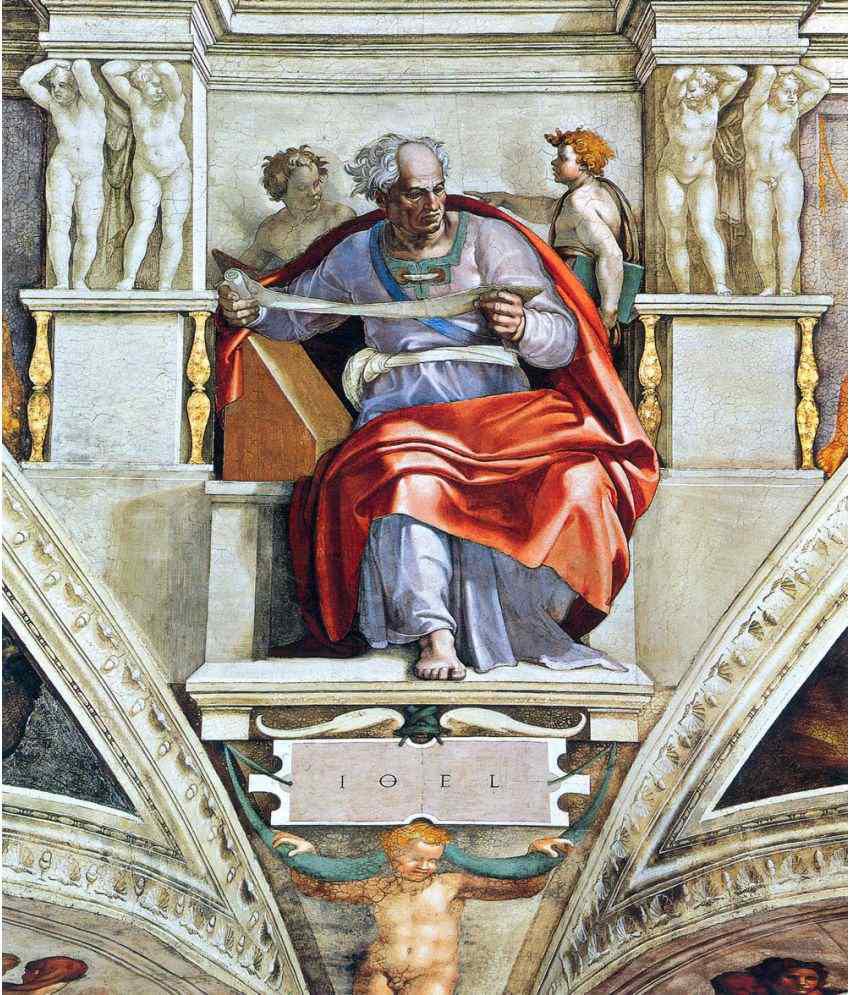
28 “And it shall come to pass afterward, that I will pour out my spirit on all flesh; your sons and your daughters shall prophesy, your old men shall dream dreams, and your young men shall see visions. 29 Even upon the menservants and maidservants in those days, I will pour out my spirit.
30 “And I will give portents in the heavens and on the earth, blood and fire and columns of smoke. 31 The sun shall be turned to darkness, and the moon to blood, before the great and terrible day of the LORD comes. 32 And it shall come to pass that all who call upon the name of the LORD shall be delivered; for in Mount Zion and in Jerusalem there shall be those who escape, as the LORD has said, and among the survivors shall be those whom the LORD calls. Joel 2:28-32
There is a lot crammed into these five verses. The four main points covered are quite controversial, and the interpretation depends on one’s hermeneutical position.
- Pouring out the Spirit.
- Last Days
- The Great and Terrible Day of the Lord.
- In Jerusalem/Zion there shall be those who escape.
FYI: In the Hebrew verse numbering system, these five verses make up all of chapter 3.
Peter’s Interpretation
Futurists who teach Joel at all will leave out the fact that this passage is said to be fulfilled in the New Testament by Peter. Those of us who are Historicists stand on apostolic authority that it is, in fact, fulfilled.
14 But Peter, standing with the eleven, lifted up his voice and addressed them, “Men of Judea and all who dwell in Jerusalem, let this be known to you, and give ear to my words. 15 For these men are not drunk, as you suppose, since it is only the third hour of the day; 16 but this is what was spoken by the prophet Joel: 17 ‘And in the last days it shall be, God declares, that I will pour out my Spirit upon all flesh, and your sons and your daughters shall prophesy, and your young men shall see visions, and your old men shall dream dreams; 18 yea, and on my menservants and my maidservants in those days I will pour out my Spirit; and they shall prophesy. 19 And I will show wonders in the heaven above and signs on the earth beneath, blood, and fire, and vapor of smoke; 20 the sun shall be turned into darkness and the moon into blood, before the day of the Lord comes, the great and manifest day. 21 And it shall be that whoever calls on the name of the Lord shall be saved.’ Acts 2:14-21
Peter was standing with the eleven. Meaning that they were in agreement. He states that they were witnessing Joel’s prophecy unfolding before their eyes. He knew that before the great and terrible day of the Lord, Elijah would come.
“Behold, I will send you Elijah the prophet before the great and terrible day of the LORD comes. Mal. 4:5
And Peter knew that John the Baptist was Elijah.
. . . and if you are willing to accept it, he is Elijah who is to come. Matt 11:14
He had sat under the Messiah Himself, explaining that the bricks and stones of Jerusalem were to be destroyed (not one stone left upon another). He knew there was no way anyone would be safe in the city of bricks and stones. So Peter tells them what it means to be safe in Jerusalem. This was a symbolic way of saying they were being saved by the Lord.
20 the sun shall be turned into darkness and the moon into blood, before the day of the Lord comes, the great and manifest day. 21 And it shall be that whoever calls on the name of the Lord shall be saved.’ Acts 2:14-21
See Also: Sun, Moon, and Stars
FYI: Jerusalem is one of the most sacked cities in history. In none of the sieges of Jerusalem in all history have the people inside the city been safe.
The passage is symbolic. The symbology continues from the last chapter, as the locust represents armies, and Zion/Jerusalem represents symbolic Jerusalem.
Pouring out the Spirit
This is an indication of the Spirit’s abundance.
. . . until the Spirit is poured upon us from on high, and the wilderness becomes a fruitful field, and the fruitful field is deemed a forest. Is 32:15
. . . and I will not hide my face any more from them, when I pour out my Spirit upon the house of Israel, says the Lord GOD.” Ez 39:29
This does not signify the moral transformation of the people, nor a deeper or more intimate knowledge of God. Rather, dreaming and having visions are the provision of the ecstatic experience of prophecy.
The “all flesh” includes everyone, even those who are disregarded in most serious discussions in a society. Those whose leadership is held in derision are the old men, the young women, and the servants.
And he said, “Hear my words: If there is a prophet among you, I the LORD make myself known to him in a vision, I speak with him in a dream. Num. 12:6
The Last Days
The term “Last Days” in the Bible refers specifically to the final period in the context of the audience being addressed. Dispensational Futurists often argue that these last days are yet to come for us today. However, historically, when the phrase was used in the Biblical context, it signified Judah’s last days—marking the end of a particular era for that nation. Or was Peter wrong?
The end of all things is at hand; therefore keep sane and sober for your prayers. 1Pet. 4:7
The Day of the Lord
Understanding The Day of The Lord: A Call for Proper Exegesis.
Many teachings about the “Day of the Lord” are often framed as a future event, primarily because these interpretations have not thoroughly examined every reference to this concept throughout the entire Bible. Instead, they rely on their own understanding, a practice known as “ego-centric exegesis.” They want the term to mean “the Return of the Lord.” Their ego interprets the Text in such a way that one introduces their own presuppositions, agendas, or biases, rather than allowing the Text to speak for itself.
Proper exegesis, on the other hand, is the process of explaining how one arrived at an understanding of the meaning by carefully considering the historical, grammatical, and cultural context of the passage. This method ensures a more accurate and comprehensive interpretation of Biblical texts.
Historical Context
The term “the day of the Lord” appears multiple times in both the Old and New Testaments, referring to various events and periods. In the Old Testament, it often denotes a time of judgment, restoration, and deliverance for Israel. For example, in Isaiah 2:12, it is described as a day when the Lord will arise to punish the proud and haughty nations. In Joel 1:15, it is portrayed as a day of darkness and gloom, a time of distress and tribulation.
However, this same phrase in the Hebrew is used when Arron is ordained, and Elijah was caught up into the chariot.
. . . and an ox and a ram for peace offerings, to sacrifice before the LORD, and a cereal offering mixed with oil; for today the LORD will appear to you.’” Lev. 9:4
The sons of the prophets who were at Jericho drew near to Elisha, and said to him, “Do you know that today the LORD will take away your master from over you?” And he answered, “Yes, I know it; hold your peace.” 2 Kings 2:5
Jerusalem
The historical, grammatical, and contextual evidence is that Jerusalem would shortly be destroyed. And indeed, in 70 AD. The Roman Army laid siege to the city. Having read this warning and the warning in the Olivet Discourse, the Believers had long abandoned Jerusalem. The last ones to leave crossed the Jordan and waited out the First Jewish Revolt in the town of Pella.
32 And it shall come to pass that all who call upon the name of the LORD shall be delivered; for in Mount Zion and in Jerusalem there shall be those who escape, as the LORD has said, and among the survivors shall be those whom the LORD calls.
Back: The Removal of the Locusts
Next: The Restoration