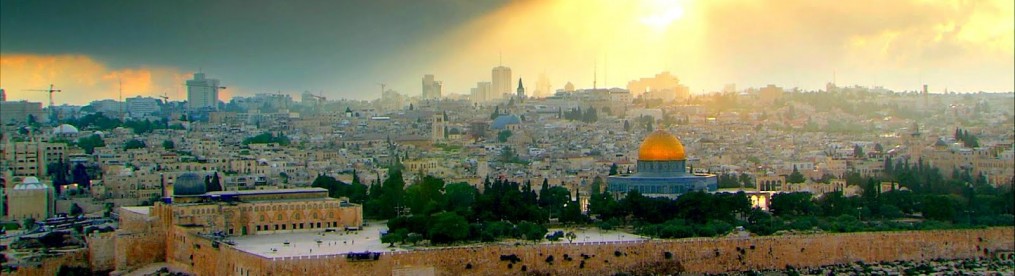
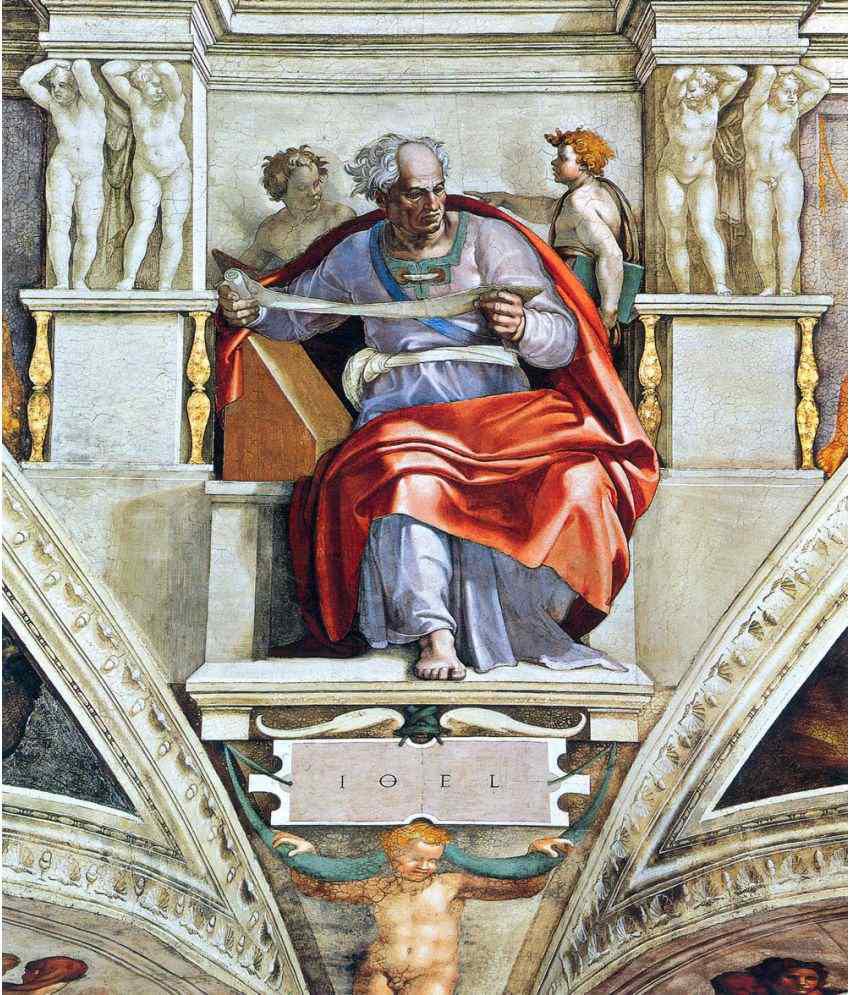
Dream Dreams and See Visions Joel 2:28-32
There is a lot crammed into these five verses. The three main points covered are quite controversial, and the interpretation depends on one’s hermeneutical position.
Pouring out the Spirit.
The great and terrible Day of the Lord.
The Jerusalem/Zion reference.
28 “And it shall come to pass afterward, that I will pour out my spirit on all flesh; your sons and your daughters shall prophesy, your old men shall dream dreams, and your young men shall see visions. 29 Even upon the menservants and maidservants in those days, I will pour out my spirit.
30 “And I will give portents in the heavens and on the earth, blood and fire and columns of smoke. 31 The sun shall be turned to darkness, and the moon to blood, before the great and terrible day of the LORD comes. 32 And it shall come to pass that all who call upon the name of the LORD shall be delivered; for in Mount Zion and in Jerusalem there shall be those who escape, as the LORD has said, and among the survivors shall be those whom the LORD calls. Joel 2:28-32
FYI: In the Hebrew verse numbering system, these five verses make up all of chapter 3.
Pouring out the Spirit
This is an indication of the abundance of the Spirit.
. . . until the Spirit is poured upon us from on high, and the wilderness becomes a fruitful field, and the fruitful field is deemed a forest. Is 32:15
. . . and I will not hide my face any more from them, when I pour out my Spirit upon the house of Israel, says the Lord GOD.” Ez 39:29;
This does not signify the moral transformation of the people, nor a deeper or more intimate knowledge of God. Rather, dreaming and having visions is the provision of the ecstatic experience of prophecy.
The “all flesh” includes everyone, even those who are disregarded in most serious discussions in a society. Those whose leadership is held in derision are the old men, the young women, and the servants.
And he said, “Hear my words: If there is a prophet among you, I the LORD make myself known to him in a vision, I speak with him in a dream. Num. 12:6
Peter’s Interpretation
Futurists who teach Joel at all will leave out the fact that this passage is said to be fulfilled in the New Testament by Peter. Those of us who are Historicists stand on apostolic authority that it is, in fact, fulfilled.
14 But Peter, standing with the eleven, lifted up his voice and addressed them, “Men of Judea and all who dwell in Jerusalem, let this be known to you, and give ear to my words. 15 For these men are not drunk, as you suppose, since it is only the third hour of the day; 16 but this is what was spoken by the prophet Joel: 17 ‘And in the last days it shall be, God declares, that I will pour out my Spirit upon all flesh, and your sons and your daughters shall prophesy, and your young men shall see visions, and your old men shall dream dreams; 18 yea, and on my menservants and my maidservants in those days I will pour out my Spirit; and they shall prophesy. 19 And I will show wonders in the heaven above and signs on the earth beneath, blood, and fire, and vapor of smoke; 20 the sun shall be turned into darkness and the moon into blood, before the day of the Lord comes, the great and manifest day. 21 And it shall be that whoever calls on the name of the Lord shall be saved.’ Acts 2:14-21
Peter knew that he was witnessing Joel’s prophecy unfolding before their eyes. He knew before the great and terrible day of the Lord, Elijah would come.
“Behold, I will send you Elijah the prophet before the great and terrible day of the LORD comes. Mal. 4:5
And Peter knew that John the Baptist was Elijah.
. . . and if you are willing to accept it, he is Elijah who is to come. Matt 11:14
He had sat under the Messiah Himself, explaining that the bricks and stones of Jerusalem were to be destroyed (not one stone left upon another). He knew there was no way anyone would be safe in the city of bricks and stones. So Peter tells them that the meaning of being safe in Jerusalem. This was a symbolic way of saying, they were being saved by the Lord.
20 the sun shall be turned into darkness and the moon into blood, before the day of the Lord comes, the great and manifest day. 21 And it shall be that whoever calls on the name of the Lord shall be saved.’ Acts 2:14-21
FYI: Jerusalem is one of the most sacked cities in history. In none of the sieges of Jerusalem in all history have the people inside the city been safe.
The passage is symbolic. The symbology continues from the last chapter, as the locust represents armies, Zion/Jerusalem represents symbolic Jerusalem.
The Day of the Lord
The sun shall be turned to darkness, and the moon to blood, before the great and terrible day of the LORD comes. Joel 2:31
Many teach that this is a future prophecy. This is because they have not looked at every reference to “the day of the Lord” throughout the entire Bible. They are relying on their own understanding. This is called eisegeis, the process of interpreting the Text in such a way as to introduce one’s own presuppositions, agendas, or biases. Proper exegesis is the explanation of how one arrived at the understanding of the meaning by carefully looking at the historical, grammatical, and cultural context of the passage. See Also: The Day of The Lord
The prophecy has attached to it a time reference, before the great and terrible day of the LORD comes. So if Peter is right about the coming of the Holy Spirit, then the great and terrible day of the Lord must have happened some time after the coming of the Holy Spirit.
When Peter explains the fulfillment of this prophecy, he leaves out the promise that Jerusalem will be the place to escape to.
Instead, he says that those who call on the Lord will be saved.
See Also: Sun, Moon, and Stars
There are two Jerusalems
25 Now Hagar is Mount Sinai in Arabia; she corresponds to the present Jerusalem, for she is in slavery with her children. 26 But the Jerusalem above is free, and she is our mother. Gal 4:25-26
Present Jerusalem
At least it was present when Paul wrote to the Galatians. Jerusalem was destroyed by the Roman armies under General Titus in 70 AD. It was no longer present. As Messiah had predicted, “… not one stone was left upon another.” It was not rebuilt as a Jewish city until after WW1. How about bricks and stones, Jerusalem?
FYI: Historically, Jerusalem was a Jebusite fortress; the name means the city or place of peace. [Judg. 1:21] It was a place where one could be at peace with God, going back to the time of Melchizedek, whose name means the king of righteousness. [Gen. 14:18]
God is not a local, tribal, or city god with a house in earthly Jerusalem. That is what the pagans believed. Every city, river, nation, etc., had its own local deity. But the one true God is the creator of the universe. He does not need a house. [2 Sam 7] He is omnipresent.
Do you not know that your body is a temple of the Holy Spirit within you, which you have from God? You are not your own; 1Cor. 6:19
[See Also: The Third Temple]
Jerusalem Above / New Jerusalem
John says New Jerusalem personifies the people of God.
1 Then I saw a new heaven and a new earth; for the first heaven and the first earth had passed away, and the sea was no more. 2 And I saw the holy city, new Jerusalem, coming down out of heaven from God, prepared as a bride adorned for her husband; 3 and I heard a loud voice from the throne saying, “Behold, the dwelling of God is with men. He will dwell with them, and they shall be his people, and God himself will be with them; 4 he will wipe away every tear from their eyes, and death shall be no more, neither shall there be mourning nor crying nor pain any more, for the former things have passed away.” Rev. 21:1-4
It is only in the symbolic Jerusalem that we are truly safe. We must no longer look to that old Jerusalem of bricks and stones, but rather to the spiritual one.
2 In that day the branch of the LORD shall be beautiful and glorious, and the fruit of the land shall be the pride and glory of the survivors of Israel. 3 And he who is left in Zion and remains in Jerusalem will be called holy, every one who has been recorded for life in Jerusalem, Is. 4:2-3
This means that one must be very careful when reading prophecy about Jerusalem/Zion. Are they about the literal or the spiritual? It is bricks and stones or a state of the heart.