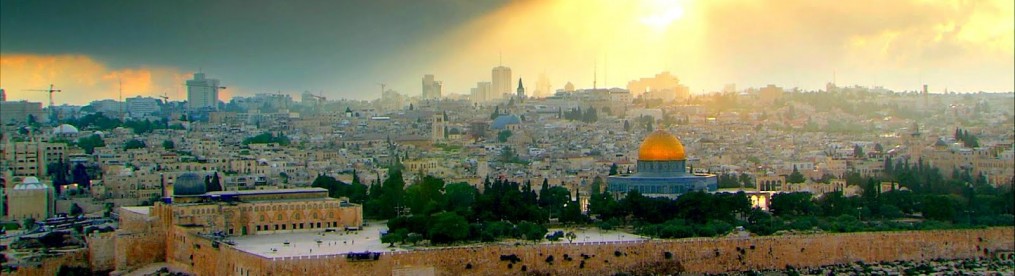
Zion’s King Comes
9 Rejoice greatly, O daughter of Zion! Shout aloud, O daughter of Jerusalem!
Lo, your king comes to you;
triumphant and victorious is he,
humble and riding on an ass, on a colt the foal of an ass.
10 I will cut off the chariot from Ephraim
and the war horse from Jerusalem;
and the battle bow shall be cut off,
and he shall command peace to the nations;
his dominion shall be from sea to sea,
and from the River to the ends of the earth.
11 As for you also, because of the blood of my covenant with you,
I will set your captives free from the waterless pit.
12 Return to your stronghold, O prisoners of hope;
today I declare that I will restore to you double. Zech 9:0-12
This passage is a singularity, so to speak.
Frequently, we see a prophecy that is about the Messiah, inserted in the midst of other Scripture. Seemingly out of place, between the judgments upon the north and the south of Judah, perhaps Zechariah 9:9-12’s inclusion is meant to draw our attention to this profound and supreme mystery of salvation. Messiah’s name, Yeshua/Jesus, means salvation. This salvation was always seen from Heaven itself as having been accomplished from the foundation of the world.
And all that dwell upon the earth shall worship him, whose names are not written in the book of life of the Lamb slain from the foundation of the world. Rev. 13:8
Rejoice Greatly!
Daughter of Zion is a beautiful personification of Jerusalem and her inhabitants. They will see your King, a Davidic reference to the Messiah who is coming. They were shouting Hosanna…..
And the crowds that went before him and that followed him shouted, “Hosanna to the Son of David! Matthew 21:9
Blessed is he who comes in the name of the Lord! Hosanna in the highest!” Ps 118:26
The translators have added the word “triumphant” here. Probably to connect the reader to the triumphal entry into Jerusalem.
Rejoice, indeed. The Hebrew shows Messiah coming with righteousness and having salvation, and he is afflicted (humble). Riding into Jerusalem upon a donkey. It is a prophecy that the Messiah would fulfill some 400 years later and therefore testifies who Messiah is.
He comes peacefully, not war-like, in contrast to the previous chapters of destructive judgments on the enemies of Judah. The ideal king’s character will include righteousness, gentleness, and humility [2 Sa 23:3; Ps 72:1-3 and in Isaiah 9:7, 11:4-5, 53:11 and Jeremiah 23:5-6, 33:15-16].
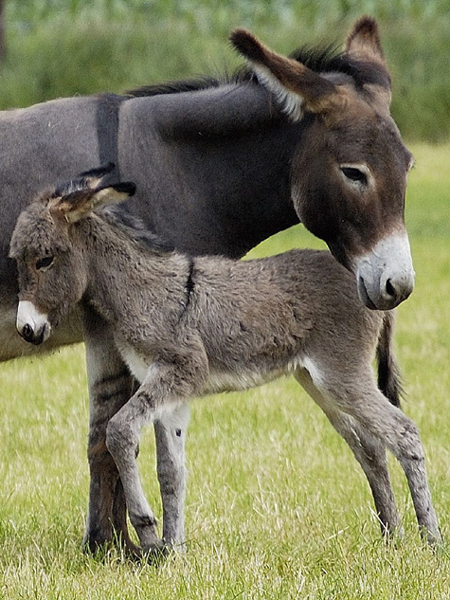
What an odd sort of sight to us, riding on an ass and the colt! However, David and his sons used mules, which were not kosher, as royal mounts [2 Sam 18:9, 1 Kings 1:33]. The donkey is a lowly, humble animal and is also a princely mount [ Judges 10:4; 12:14; and 2 Sam 16:2].
This is what we know as “the Triumphal Entry” into Jerusalem. Four days before the Passover week, the lamb is to be chosen and examined for imperfections before the sacrifice [Matt 21:1-11]. Jesus asks His disciples to go find a donkey and her colt for Him, and Matthew records that this was in fulfillment of this passage in Zechariah. The city welcomed Yeshua/Jesus, whose name means salvation. The people proclaimed him as the Son of David and the Messiah.
“This took place to fulfill what was spoken by the prophet, saying, “Tell the daughter of Zion, Behold, your king is coming to you, humble, and mounted on an ass, and on a colt, the foal of an ass.” Matt. 21:4-5
I will cut off the chariot… the war horse…. and the battle bow, and command peace to the nations. The Abrahamic Covenant is a covenant of universal peace [Gen 12:3; 18:18; 22:18]. This proclamation to all nations ushers in a kingdom of universal peace. His rule will extend over all the earth. Isaiah and Micah also talk of this day [Isa 2:4; 9:5-7; 11:1-10; Micah 5:10-11].
FYI: Universal rule: He shall judge between the nations, and shall decide for many people; and they shall beat their  swords into plowshares, and their spears into pruning hooks; nation shall not lift up sword against nation, neither shall they learn war any more. Isaiah 2: 4 c.f. Ps 22:27-28; 72:8-11; Isa 45:22; 52:10; 66:18
The Lord keeps His covenant: This is the new covenant (forshadowed in the Mosaic Covenant, Ex 24:3-8) mentioned here as “the blood of my covenant with you” and fulfilled in Matthew 26:26-29
... for this is my blood of the covenant, which is poured out for many for the forgveness of sins”. Matthew 26: 28“
Pingback: The Triumphal Entry of The Lamb | Israel & The Church in the Last Days