By the authority of the first beast, the dragon, i.e., Satan, the beast from the earth seeks to deceive humanity into worshiping Satan himself. Like the Pharisees, this spiritual leader is also completely lost in their arrogance.
You are of your father the devil, and your will is to do your father’s desires. He was a murderer from the beginning, and has nothing to do with the truth, because there is no truth in him. When he lies, he speaks according to his own nature, for he is a liar and the father of lies. John 8:44
In 538 AD, Emperor Justinian (in the Eastern Roman Empire) recognized the Pope as Head of all the Churches in Christendom. The Popes assumed spiritual authority as the mediator between God and man. Their co-rulership alongside the 10 nations would last for 1260 years. The temporal power of the papacy grew enormously. Emperors, Kings, and nations would grant the Roman Church many advantages over all churches. By the late eleventh century, Pope Gregory VII could write to William I of England about their co-rulership. The primary ambition of the beast out of the sea was to have the 10 nations all dedicated to blasphemy and war.
Miracles and Signs of the Beast
13 It works great signs, even making fire come down from heaven to earth in the sight of men; 14 and by the signs which it is allowed to work in the presence of the beast, it deceives those who dwell on earth, Revelation 13:13, 14
The beast performs great signs to deceive the inhabitants of the earth, even making fire come down from heaven to earth! This is a reference to Elijah calling down fire as a judgment from heaven. [I Kings 18] The beast out of the earth metaphorically calls down judgments from heaven in the form of papal bulls, denunciations, and anathemas. The Popes claim authority to speak and make judgments in the name of God.
The Church of Rome has weeping Madonnas and winking images of saints. One particular such manifestation is the “Our Lady of ….” (i.e. Guadeloupe, Lourdes, Fatima, etc.), where one looks into the sun until one sees sparks and rays shooting out of the sun. Many a person has gone blind doing this!
This beast from the earth makes miracles to deceive those who follow it, to misdirect worship away from God. Here is just one of the numerous false miracles of the Church of Rome:
“THE BLOOD OF ST. JANUARIUS:
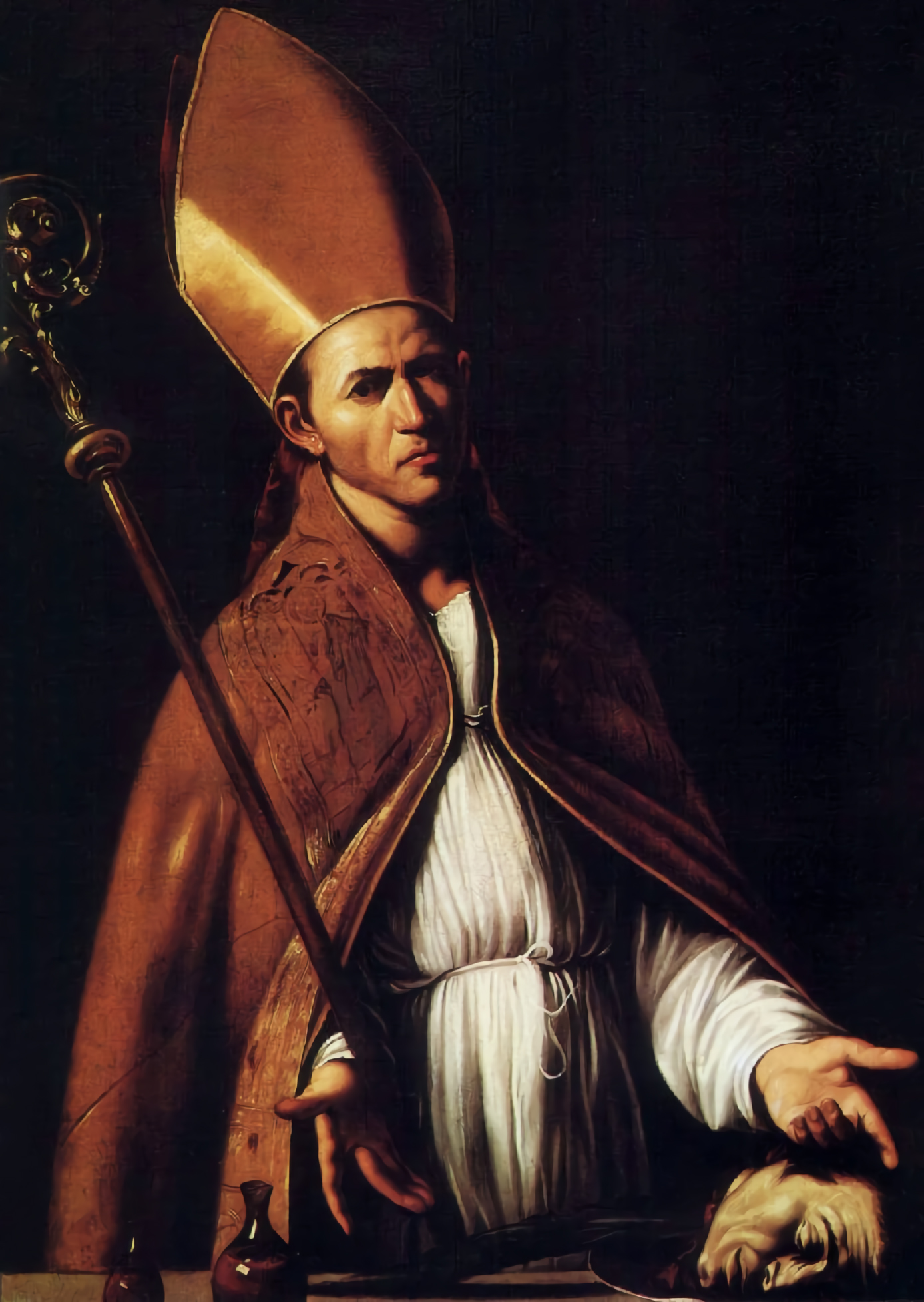
Saint Januarius, the patron saint of Naples, is practically the god of that great city, with its six hundred thousand inhabitants. Everywhere he is honored and worshiped as the presiding divinity of the place. The cathedral of Naples is dedicated to him. This cathedral contains a wonderful little chapel, which cost over a million dollars, and this also is dedicated to the “Divine Januarius,” It was erected in consequence of a vow made to St. Januarius during the plague of 1527, it being understood that if he would stop the plague the people would build the chapel. Many wonderful things are related concerning this saint.
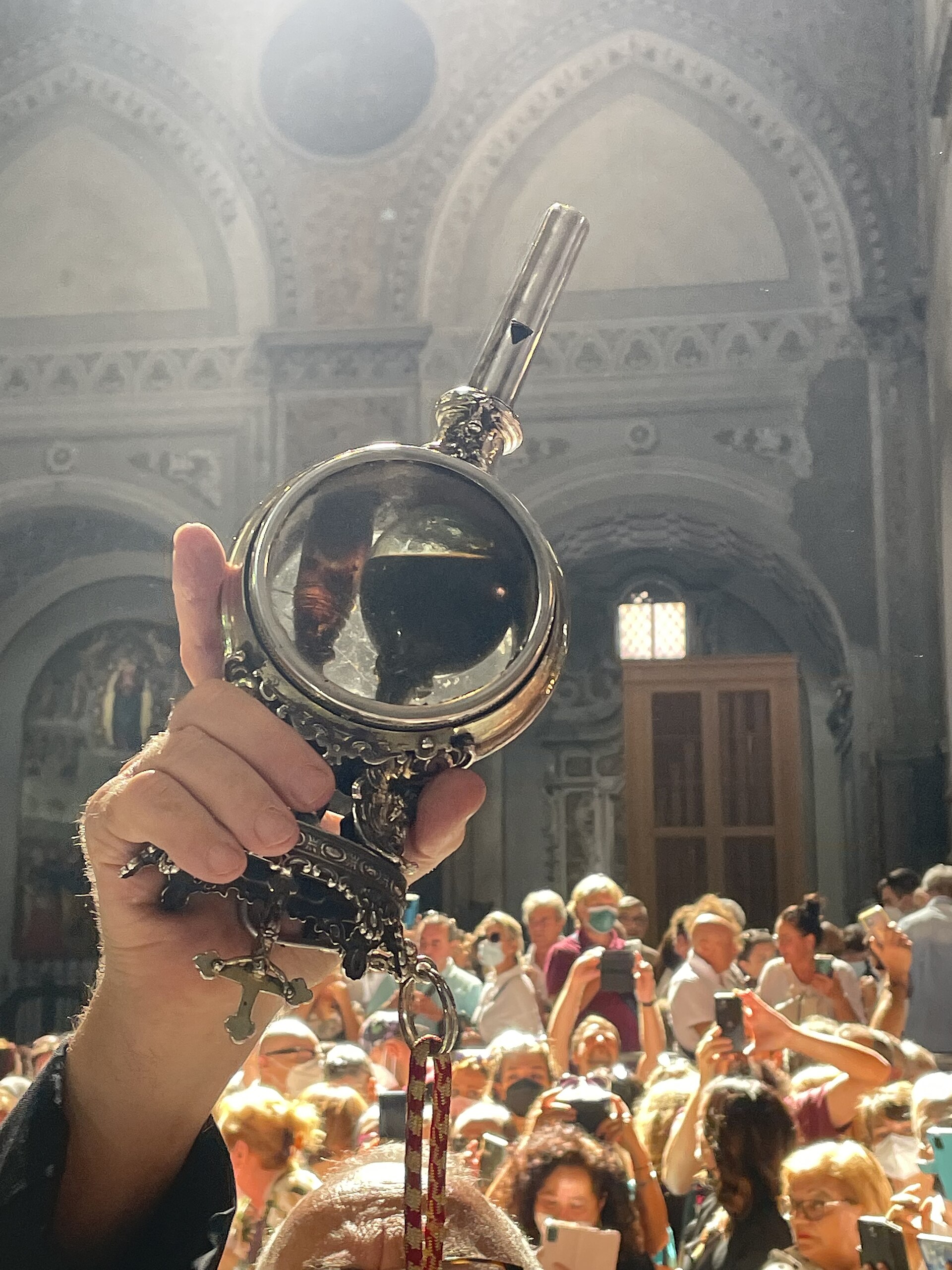
Three of the great annual festivals of Naples honor the occasion of the so-called liquefaction of the blood of St. Januarius, which blood the priest profess to have in a small vial. This miraculous liquefaction takes place three times a year, on his feast days, September 19th and December 20th, that the people may have an undeniable demonstration of the fact that their patron saint is still alive and zealously guarding the interest of the city. If this so-called miracle fails to take place at the appointed time, many of the people become nervous and anxious, fearing that something has happened to displease St. Januarius, and that he may thus refuse to hear their prayers and avert the evils that are liable to befall them at any time. What power this gives the priest!
Years ago, when the French entered Naples and took possession of the city, the archbishop announced to the people that St. Januarius was greatly displeased at the presence of these foreign invaders in the city, for the blood would not liquefy at the appointed time. Hearing of this, and knowing how disastrous it might prove to his cause, the French general quietly sent a messenger to the archbishop to say to him that if the blood were not liquefied within twenty-four hours he would burn the cathedral to the ground. It is needless to say that the miracle (?) was soon preformed and announced to the people, who little suspected the real cause.” Ins and Outs of Romanism by Joseph John Zacchello page 89
There is hardly a ceremony or miracle surrounding an image or saint performed to this day, on the banks of the Tiber River in Rome, that cannot be proved to have had its equivalent on the banks of the Euphrates, or from within the Mystery Religions. What on the face looks pious or saintly is simply deadly deception and fraud.
Idols
It is perhaps best to have the Roman Catholic Church explain how idols offer salvation and honor the dead.
From the “Catechism of the Catholic Church” 1992
2129 The divine injunction included the prohibition of every representation of God by the hand of man. Deuteronomy explains: “Since you saw no form on the day that the Lord spoke to you at Horeb out of the midst of the fire, beware lest you act corruptly by making a graven image for yourselves, in the form of any figure….”It is the absolutely transcendent God who revealed himself to Israel. “He is the all,” but at the same time” he is greater than all his works.” He is “the author of beauty.”
2130 Nevertheless, already in the Old Testament, God ordained or permitted the making of images that pointed symbolically toward salvation by the incarnate Word: so it was with the bronze serpent, the ark of the covenant, and the cherubim.
2131 Basing itself on the mystery of the incarnate Word, the seventh ecumenical council at Nicaea (787) justified against the iconoclasts the veneration of icons – of Christ, but also of the Mother of God, the angels, and all the saints. By becoming incarnate, the Son of God introduced a new “economy” of images.
2132 The Christian veneration of images is not contrary to the first commandment, which proscribed idols. Indeed, “the honor rendered to an image passes to its prototype,” and “whoever venerates an image venerates the person portrayed in it.” The honor paid to sacred images is a “respectful veneration,” not the adoration due to God alone:
Religious worship is not directed to images in themselves, considered as mere things, but under their distinctive aspect as images leading us on to God incarnate. The movement toward the image does not terminate in it as image, but tends toward that whose image it is. St. Thomas Aquinas