Jerusalem is a Cup of Reeling
1 An Oracle
The word of the LORD concerning Israel: Thus says the LORD, who stretched out the heavens and founded the earth and formed the spirit of man within him: 2 “Lo, I am about to make Jerusalem a cup of reeling to all the peoples round about; it will be against Judah also in the siege against Jerusalem. 3 On that day I will make Jerusalem a heavy stone for all the peoples; all who lift it shall grievously hurt themselves. And all the nations of the earth will come together against it. 4 On that day, says the LORD, I will strike every horse with panic, and its rider with madness. But upon the house of Judah I will open my eyes, when I strike every horse of the peoples with blindness. 5 Then the clans of Judah shall say to themselves, ‘The inhabitants of Jerusalem have strength through the LORD of hosts, their God.’
The Cup
Reeling in Hebrew is ra’al, to quiver, shake, or reel. Jerusalem is one of the most sacked cities in the world. It sits at the center of the land masses. In ancient times, most of the world’s trade passed through it. This is a promise that all who go up against Jerusalem are going to have trouble doing it.
The drinking cup, bowl, and vial are symbols of God’s judgement.
On the wicked he will rain coals of fire and brimstone; a scorching wind shall be the portion of their cup. Psa. 11:6
Babylon was a golden cup in the LORD’s hand, making all the earth drunken; the nations drank of her wine, therefore the nations went mad. Jer. 51:7
And one of the four living creatures gave the seven angels seven golden bowls full of the wrath of God who lives for ever and ever; Rev. 15:7
History
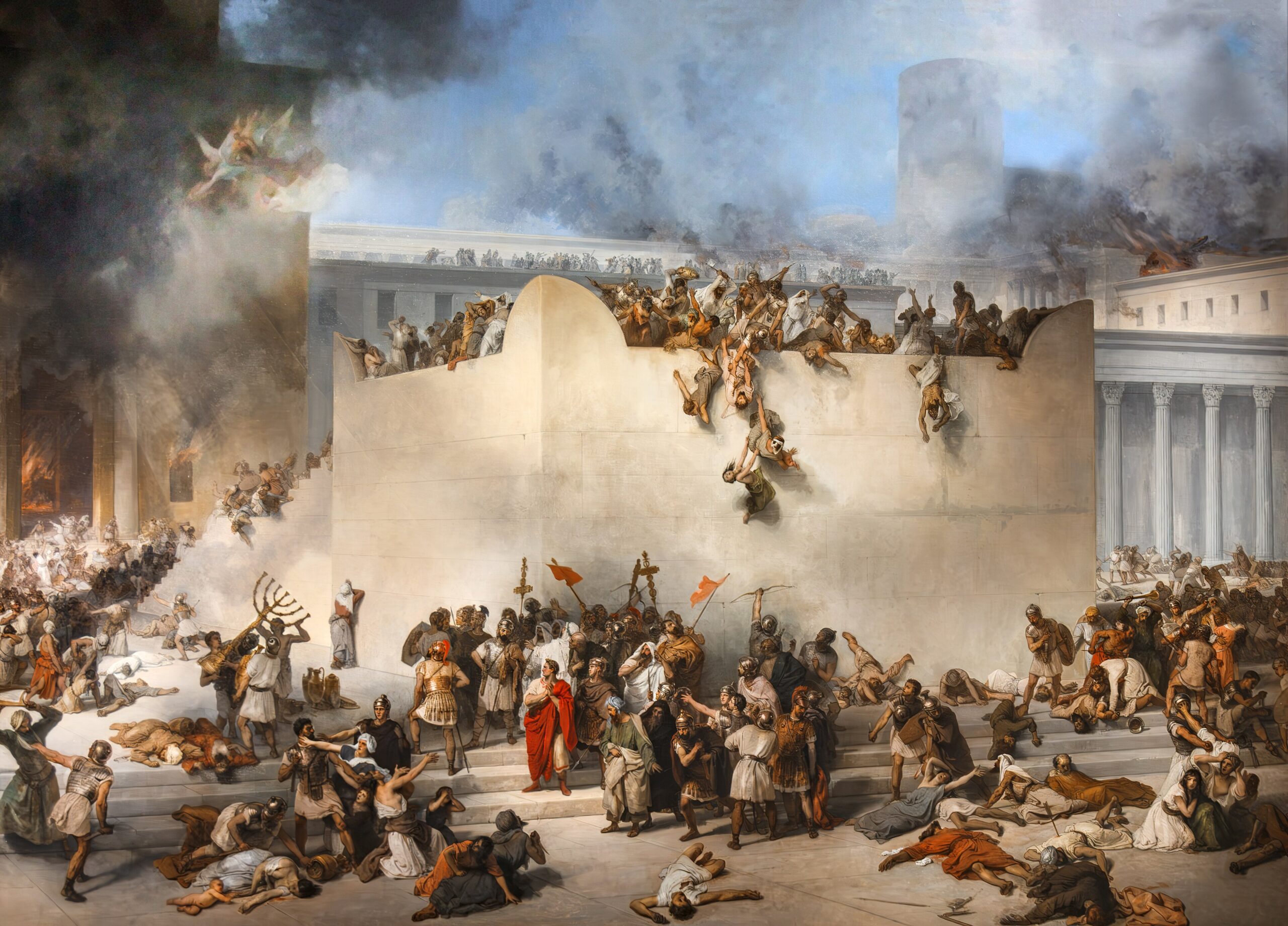
From the time of Zechariah it has always been inadvisable to siege Jerusalem. Most conquerors have negotiated a surrender.
- Alexander the Great negotiated with Jaddus the high priest.
- Antiochus IV Epiphanes did take Jerusalem by force. He held the city for three and a half years. This began a long disintegration of his Empire. He died in 164 BC. His death brought about a long string of internal strife and rivalry in the royal family. In 63 BC. Pompey made Syria a Roman province.
- Pompey besieged Jerusalem in 63 BC, during a time of Rome’s expanding empire under the Triumvirate. Following his conquests, he was ultimately killed by Lucius Septimius, a Roman officer who had served under him. Pompey’s body was cremated by two loyal servants, while his head was preserved as proof of his demise. His head was eventually sent back to Cornelia for burial at his villa in the Alban Hills. Pompey’s ignoble death inspired Cicero to remark, “his life outlasted his power,” highlighting how his influence lingered even after his fall.
- Titus took Jerusalem in 70AD, as prophesied by Daniel 9 and Matthew 24. He suffered no personal trouble as he became the next Roman Emperor. However, Rome struggled with the Jews and Jerusalem for another 60 years, ending with the Bar Kokba rebellion, which gave us Chanukah.
- Muslim conquest in 638 AD. was a negotiated surrender.
- The First Crusade, 1099 AD. turned Jerusalem into a permanent flashpoint till the fall of the Ottoman Empire in 1920.
The Jews themselves sieged Jerusalem in 1967. Since then, it has been a continuing problem, as a focal point for the antisemitic ideologies of the world.
A Heavy Stone
Judah and Jerusalem have long been a heavy burden for any ruler seeking to govern there. During the Ottoman era, the region was largely neglected, with few inhabitants and a landscape that resembled a wasteland. In the nineteenth century, a wave of Jewish immigrants from Eastern Europe and Russia began returning to what is called the Promised Land, initially in small groups. Following the end of World War I, Britain took control of Palestine, having received a mandate from the League of Nations. The British government had promised the Jews a homeland in the Balfour Declaration, but when it was time to implement this promise, they reneged, issuing the White Papers to restrict Jewish immigration.
This failure to honor the Declaration marked the beginning of a decline for the British Empire, as one nation after another moved towards independence. Efforts to sustain influence through the Commonwealth of Nations ultimately faltered, revealing the shifting tides of power and the waning influence of colonial empires.
Crazy Horses
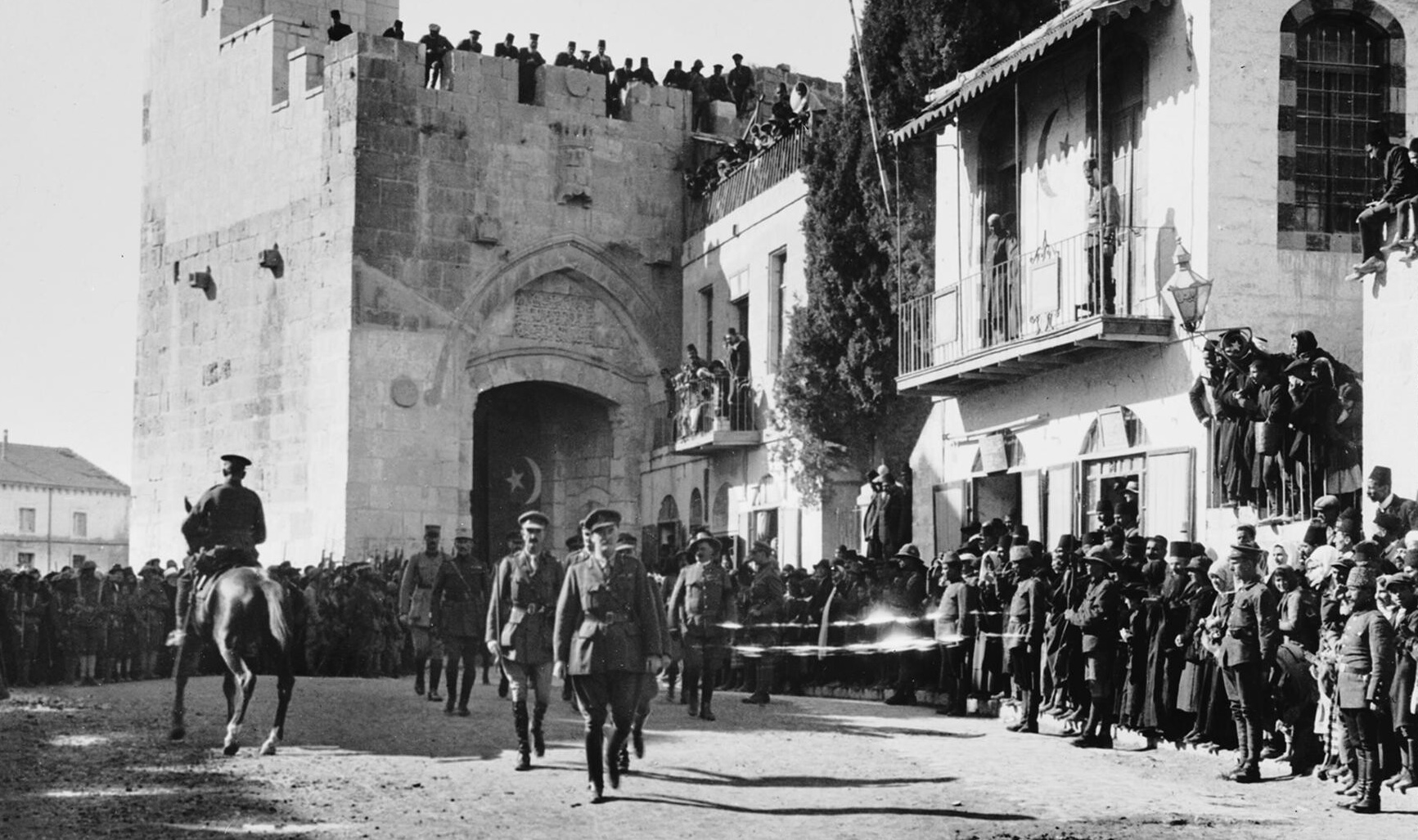
These represent the inability of sieging nations to control their troop movements. As British General Allenby, head of the Allied forces, moved through the area in World War One, he was very mindful of all prophecies concerning Israel and Jerusalem, so he famously ordered the officers to walk into the city.
Typology
If the weight of the stone of Judah and Jerusalem symbolizes the persecution of the Gospel Jerusalem, then the same principle applies: nations that persecute God’s people will ultimately find themselves broken and destroyed. Spain, which once wielded unparalleled power and wealth, experienced a decline following the establishment of the Inquisition. Over time, their influence was gradually siphoned off, shifting strength to the Dutch and British, illustrating how divine judgment can manifest through the fall of even the mightiest kingdoms.
Back: An Oracle
Next: A Blazing Pot